A small, statically typed language that feels like Python and runs like C. One command compiles and runs your program in milliseconds, as a native Linux or Windows executable or as a single web page.
curl -fsSL https://sloppy-lang.org/install | bashIn a terminal, on x86-64 or arm64. Installs to ~/.sloppy; the command works at once.
curl -fsSL https://sloppy-lang.org/install | bashIn Terminal, on a Mac with Apple Silicon (M1 or later). Installs to ~/.sloppy; no Xcode needed.
irm https://sloppy-lang.org/install.ps1 | iexIn PowerShell, on Windows 10 or 11 (x64). Installs to %LOCALAPPDATA%\sloppy; the command works at once.
On a phone or tablet? Sloppy installs on a computer; here, try it in the browser.

pos = vec2(400, 300)
update = (dt: f64):
pos += input_axis() * 300 * dt
draw = ():
clear(rgb(0.08, 0.08, 0.12))
circle(pos, 24, rgb(1.0, 0.6, 0.2))
text("arrow keys", vec2(20, 20), 24, WHITE)
A whole program: a window, and a ball the arrow keys move. Run it in the playground
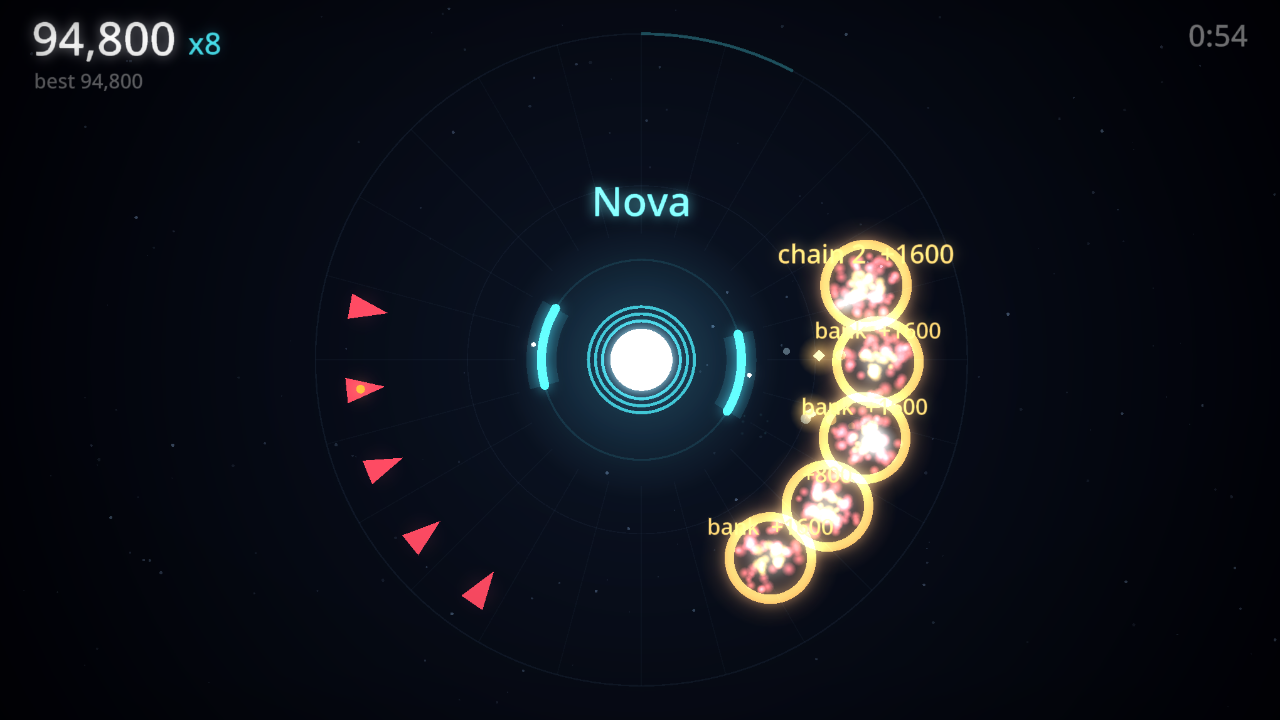
An arcade game. Turn the shield to catch the turrets' bolts and send them back: blasts set off the turrets beside them, catches near the shield's edge bank off to other turrets, and every few turrets you choose an upgrade. Menus, settings, a saved best score, and sound made by the built-in synthesizer.
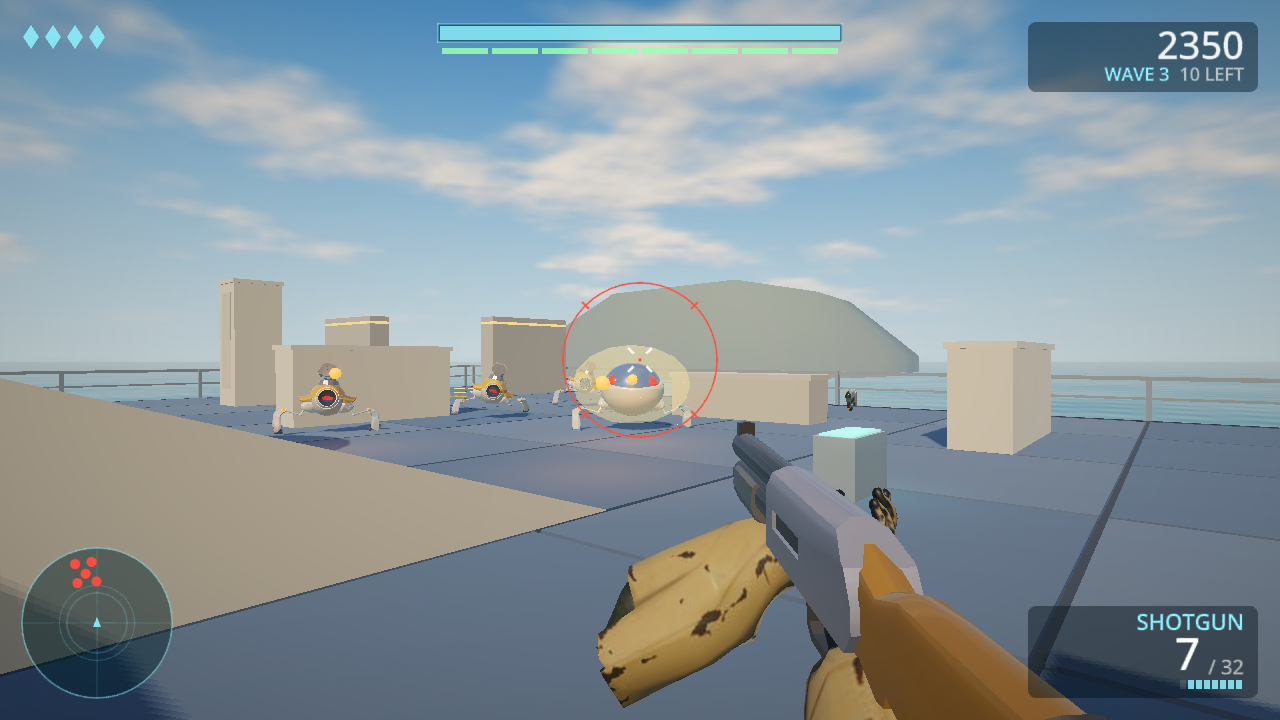
A first-person shooter: hold a platform at sea against waves of robots. A shield that recharges, two weapons at a time from racks and fallen robots, grenades and melee. Animated glTF models (robots and weapons by Quaternius), shadows, bloom and synthesized sound; mouse, keyboard alone, or a gamepad.
About 250,000 lines a second. Hello world compiles and runs in about 10 ms; there is no build system, options live in the source.
Release builds run within about 1.5× of gcc -O2, with bounds checks on. parallel_map uses every core; GPU arrays run on the GPU.
Type inference everywhere, indentation syntax, closures, partial application, generics without ceremony, unions, value semantics with no garbage collector.
Windows, input, 2D drawing, a 3D renderer with shadows and bloom, shaders written in Sloppy, audio, pixel art and any screen shape, all built in.
Native programs are static executables with no dependencies; web builds are one HTML file. Graphics drivers are optional: there is a software renderer.
The compiler is written in Sloppy and compiles itself, even in this site's playground, where it runs as WebAssembly.
Values are copied, never shared; loop mut changes the elements themselves.
struct Ball:
pos: vec2
vel: vec2
bounces = 0
balls = [Ball(vec2(0, 90), vec2(80, 40))]
balls.push(Ball(vec2(0, 20), vec2(60, 10)))
loop mut b in balls:
b.pos += b.vel * 0.5
if b.pos.y > 100:
b.vel.y = -b.vel.y
b.bounces += 1
print(balls)A function returns its result or what went wrong; after the check, n is an int.
struct BadLine:
line: int
text: str
total = (text: str) -> int | BadLine:
sum = 0
loop i in 1.. and l in lines(text):
n = to_int(l)
if n is none: return BadLine(i, l)
sum += n
sum
print(total("4\n5\n6"))
print(total("4\nfive\n6"))Any value is kept as text and read back by field name, so old saves still load after new fields.
struct Progress:
level = 1
coins = 0
unlocked: str[]
# (the defaults the first time)
p = load_value("progress", Progress())
p.coins += 25
p.unlocked.push("double jump")
save_value("progress", p)
print(p)Editors: sloppy lsp is a language server (and there is a VS Code / Cursor extension). An interactive prompt: run sloppy with no file.